Comfort · Workspace · Chair decision
How to Choose an Ergonomic Chair That Fits You and Your Desk
Do not start with a “best chair” list. Start by checking whether your current chair is actually the limiting part of your workspace, then measure the person and the desk, identify the adjustments that matter, and verify the exact chair variant before comparing prices.
Calmivora uses an India-specific, evidence-first process designed to answer a narrower question: can this exact chair configuration reasonably fit this person, this desk and this work pattern?
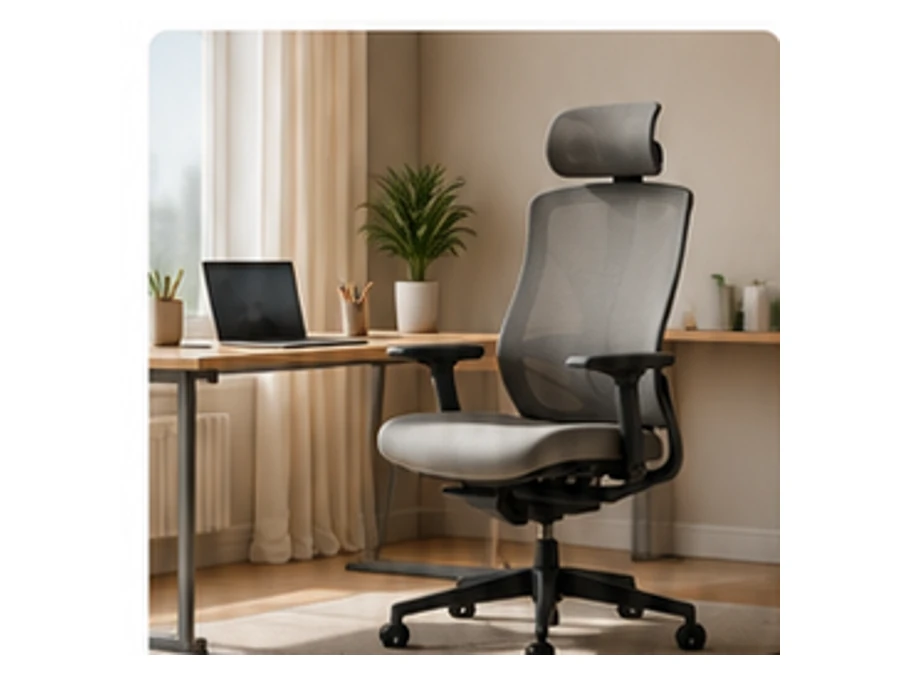
Quick Answer
A useful chair decision depends on more than lumbar support, recline angle or the number of armrest directions. First record your body measurements and desk constraints. Then check whether the chair’s seat-height range, effective seat depth, usable width, armrest range, back/lumbar support and verified whole-chair load rating can work together in your setup. If the exact variant or a mandatory specification is unclear, the correct decision is to pause—not guess.
The Calmivora chair decision path
We use six stages so product features cannot jump ahead of fit and evidence.
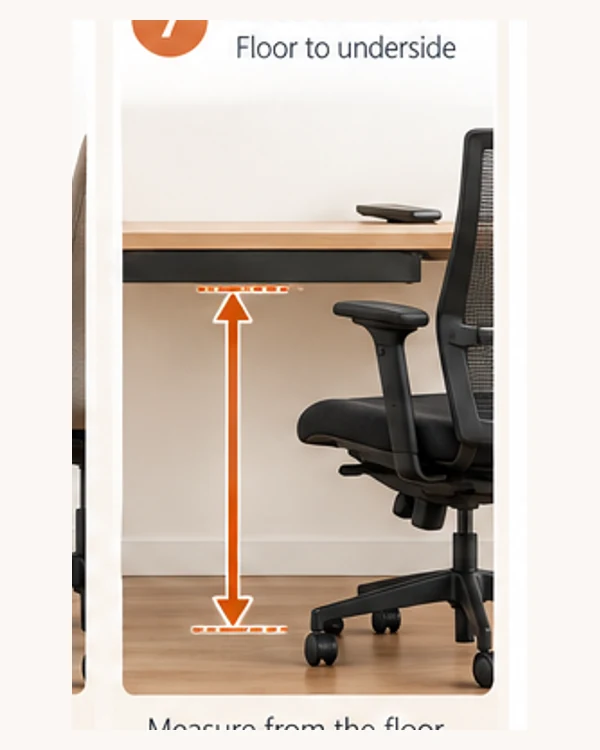
ANATOMY & DESK INTERFACE
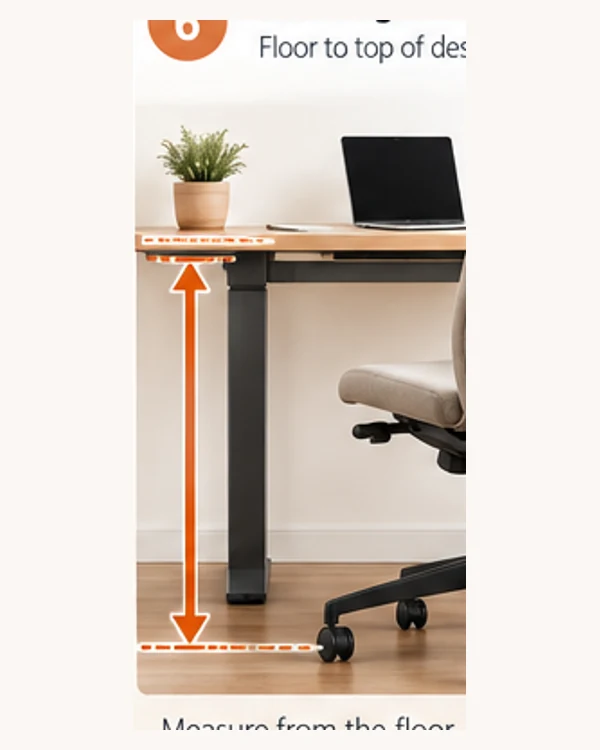
Desk clearance changes whether a chair can actually work
Body fit is only one gate. The chair must still reach a usable working height, clear the desk underside and allow the user to approach the keyboard without armrest or thigh interference.
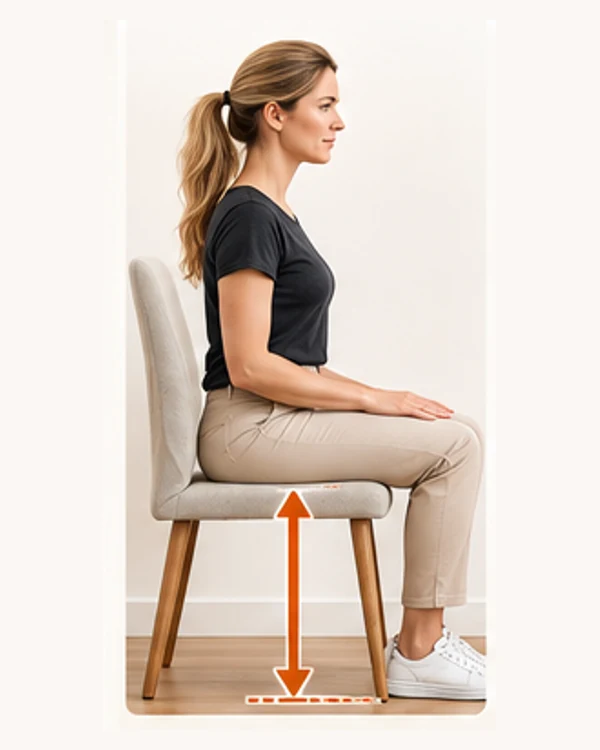
01 · Measure
Record the person
Capture popliteal height, buttock-to-popliteal length, seated hip breadth, seated elbow position and body weight.
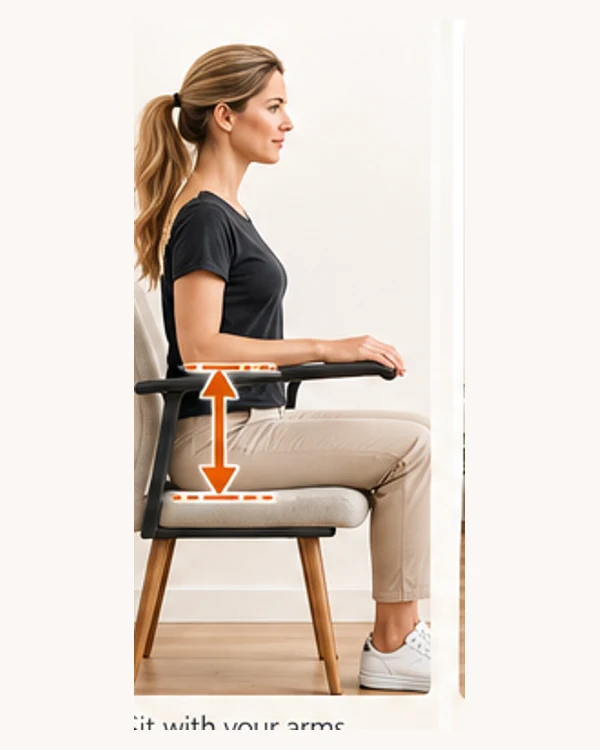
02 · Fit
Match chair geometry
Check whether seat height, seat depth, usable width and adjustment ranges can accommodate the individual rather than an “average user.”
03 · Workstation
Check the desk relationship
Confirm desk height, underside clearance, keyboard position and whether armrests or the chair itself interfere with getting close enough to work.
04 · Support
Evaluate useful adjustments
Look at back/lumbar adjustment, armrest range, recline or tilt, base and castors only in relation to the user’s actual needs.
05 · Verify
Verify the exact product
Bind specifications to the exact generation, configuration and SKU. Check load rating, warranty, returns, service and applicable BIS/ISI/CM-L evidence.
06 · Compare
Compare only compatible options
Once mandatory fit and evidence gates are satisfied, compare the remaining products by the use case—not by an arbitrary score or “best overall” label.
First decide whether you actually need a different chair
A new chair becomes more justifiable when the existing chair cannot be adjusted into a workable relationship with your body and desk, or when a fundamental limitation remains after reasonable setup changes.
- You cannot obtain stable foot support and an appropriate working height at the same time.
- The seat is too deep or otherwise prevents you from sitting back and using the backrest comfortably.
- The chair or armrests prevent you from approaching the desk appropriately and cannot be adjusted out of the way.
- A required adjustment is absent, broken or does not cover the range you need.
- The chair’s identity, load rating or structural condition creates an unresolved suitability question.
If your current chair can already be adjusted to fit and the problem is actually screen, keyboard, desk or work-pattern related, replacing the chair may not solve the original problem.
What we need before comparing chairs
The decision uses two input sets: information about you and information about the workspace.
Body measurements
- Popliteal height
- Buttock-to-popliteal length
- Seated hip breadth
- Seated elbow position
- Body weight
These are decision inputs. They are not medical measurements and are not copied directly into a chair specification without a fit check.
Workstation measurements
- Desk or work-surface height
- Desk underside clearance
- Drawer or apron interference
- Keyboard/input surface height where different
- Available chair width and footrest availability
A chair can fit your body but still be a poor choice for a fixed-height desk.
Which chair specifications actually matter?
Calmivora separates chair features by their role in the decision instead of rewarding products for having more features.
MUST FIT
Seat-height range, effective seat depth, usable seat width, user-mass rating and chair-to-desk compatibility.
HIGH VALUE
Adjustable lumbar/back support, usable armrest range, seat slider and movement controls when they solve the user’s specific limitation.
CONDITIONAL
Headrests, deep recline, footrests and specialised mechanisms that matter only for particular tasks, preferences or use cases.
MARKETING NOISE
Labels such as “executive,” “orthopaedic,” “premium ergonomic” or large feature counts do not prove body fit, durability or regulatory status.
Do not buy yet if a mandatory fact is still unclear
- The marketplace listing cannot be tied confidently to the exact evaluated variant.
- A component test value is being presented as though it were the whole-chair user-mass rating.
- The seat dimensions or adjustment ranges come from a different generation or configuration.
- The return policy only covers damage or replacement but you are relying on it as a comfort/fit trial.
- A generic certification claim cannot be matched to the applicable manufacturer/model evidence.
Missing evidence is not a pass. Calmivora keeps unresolved fields open until better evidence is available.
India-specific checks before you compare prices
For Indian work chairs, Calmivora records the exact model identity, whole-chair load evidence, warranty, return or trial terms, service and spare-part information, and applicable BIS/ISI/CM-L evidence. IS 17631:2022 is listed by the Bureau of Indian Standards for work chairs under the Furniture Quality Control framework.
A marketplace badge, a generic “BIS certified” statement, a BIFMA claim or an ISO reference is not automatically treated as proof that the exact retail configuration is covered. When that mapping cannot be established, the regulatory field remains unverified.
Current recommendation status
Why there is no “best ergonomic chair” list here yet
Calmivora does not publish a universal “best ergonomic chair” list. Products appear only when the exact configuration has enough evidence for a defined use case, so a chair may qualify for one specific decision while other fit, load or regulatory questions remain unresolved.
The governed decision below applies only to the use case shown on the card. It does not establish individual body fit, desk compatibility, verified whole-chair load suitability or an overall recommendation for every user.
Frequently Asked Questions
What makes a chair ergonomic?
“Ergonomic” is not enough as a shopping label. The useful question is whether the chair’s dimensions, adjustments and support can fit the specific user and work surface while allowing changes of position.
Is a chair with more adjustments automatically better?
No. An adjustment is valuable only if its range solves a real fit or work-pattern need. A 4D armrest that cannot reach the user’s elbow position or prevents desk access is not automatically more useful than a simpler armrest that fits correctly.
Can I choose a chair using only my height?
Height alone is too crude for a careful fit decision because people of the same height can have different lower-leg length, thigh length, hip breadth and seated elbow position. Calmivora uses seated measurements and desk constraints instead.
Is a 250 kg gas-lift test the same as a 250 kg chair rating?
No. A component test or gas-lift capacity does not establish the maximum user mass of the complete chair. Calmivora records component tests separately and uses a whole-chair manufacturer rating for user-mass decisions.
Should I buy from the cheapest marketplace listing?
Not until the exact variant is verified. Price, seller, return terms and stock are commercial variables; they come after product identity, fit and evidence.
Sources & Methodology
This hub uses independent workstation guidance for fit principles and keeps manufacturer, marketplace and regulatory evidence separate during product qualification.
- U.S. Occupational Safety and Health Administration — Computer Workstations eTool. Used for chair fit principles covering seat height/depth, foot support, backrest, armrests and whole-workstation adjustment. Source.
- Canadian Centre for Occupational Health and Safety — How to Adjust Office Chairs. Used to cross-check the relationship between chair, work surface and floor/foot support and the need to assess a chair together with a fixed-height workstation. Source.
- Bureau of Indian Standards — Scheme I compulsory certification list. Used for India-specific standards context identifying IS 17631:2022 for work chairs under the Furniture Quality Control framework. Source.
Last reviewed: September 2026. Product specifications and commercial policies can change; Calmivora verifies exact variants separately from this general decision guidance.
Affiliate disclosure: Calmivora may later use affiliate links when a product and merchant offer pass the relevant editorial and commercial gates. Affiliate availability does not determine product qualification.